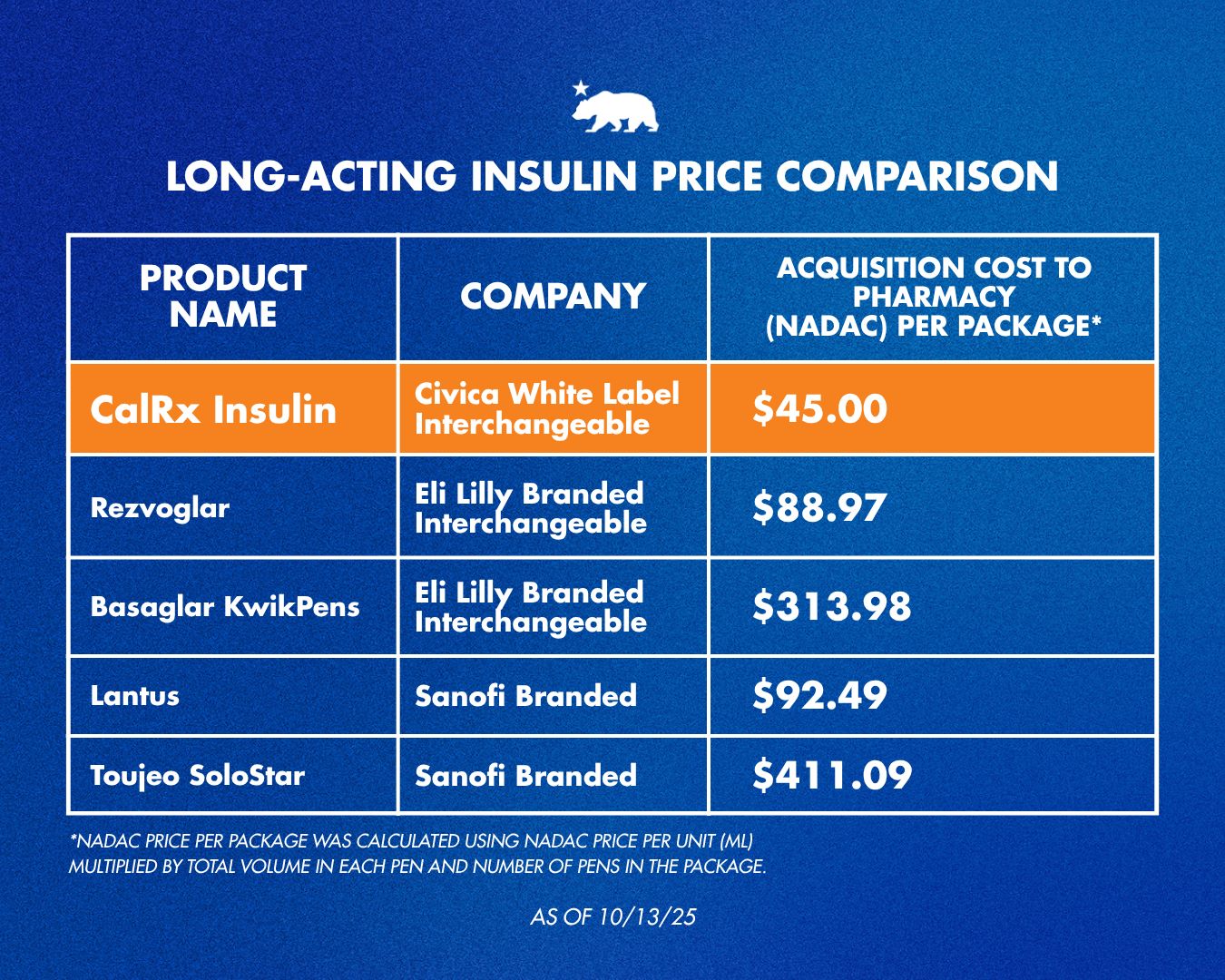
Biopharmaceutical firms and their middlemen make too much money at the expense of people’s lives and dignity. This claim, once primarily associated with progressive public health groups, is now endorsed by practicing clinicians, billionaires, and conservative politicians. With the political wind at their back, the FTC and various state attorneys general have brought enforcement actions against drugmakers and intermediaries, Congress has leveraged federal purchasing power to directly negotiate drug prices, and even the Trump administration has launched the (far more superficial and ineffective) TrumpRx initiative. Yet none of these interventions actually address the root issue: our private system for producing and provisioning medicine is designed to keep many medicines unaffordable and inaccessible.
Patient advocates know better. Rather than relying on piecemeal and contingent price controls, they are pushing for wholesale changes to the incentive structures behind – and balance of powers within – the pharma industry. That goal is at the heart of public pharma, an approach to healthcare reform that aims to place control over lifesaving medicines in the hands of democratically accountable institutions. Public pharma can reshape the political economy of healthcare, deliver cheaper medicines, and help us live healthier lives. This is why T1International, a diabetes patient advocacy group fighting to make insulin products available to everyone who needs them, made 2026 their Year of Public Pharma. (Full disclosure: I had the honor of helping represent this organization last spring.) It is also why public pharma deserves the LPE movement’s close attention, as well as a place on the policy platform of every US politician campaigning on universal healthcare.
What Is Public Pharma?
Public pharma is a broad umbrella. It encompasses any instance where a government entity steps into a role otherwise performed by private actors in researching, manufacturing, purchasing or distributing medicines to patients. Public pharma is prevalent across the world and, perhaps more surprisingly, already has a foothold in the United States. Unsung domestic examples include California’s Department of Public Health, which is the sole producer of the orphan drug used to treat infant botulism, as well as the Walter Reed Army Institute of Research’s Pilot Bioproduction Facility, which develops and manufactures vaccines and biologics relevant to the military. It also includes the foundational layers of basic drug research that have long been federally funded.
In recent years, however, policymakers have realized that the government has to do much more. Public pharma proposals are spreading rapidly at the state level, as new programs like CalRx – an ambitious drug procurement and manufacturing initiative that began with long-acting insulin, naloxone, and albuterol inhalers, and is now turning to a tuberculosis treatment and EpiPens – show it is possible for public actors to take on rent-seekers.
This new wave of public pharma makes twin promises: affordability and accessibility. Because they seek no profit of their own, public pharma programs by their nature put money back into patients’ pockets. CalRx, for instance, sells its pack of long-acting insulin pens to pharmacies for $45, half the cost as the next-cheapest competitor. (With more than one third of Americans insured by public health plans, any savings on medicine also accrue to cash-strapped state and local governments.) But price cuts mean little if patients cannot actually get the discounted products at the pharmacy counter. For instance, pharmacies may stop carrying discounted insulin because they sometimes lose money when selling it. To overcome this problem, CalRx has suggested a $55 retail price for its pens, with a $10 dispensing fee baked in.
Public pharma can also advance its two goals by combating the extraordinary consolidation and self-dealing that characterizes the pharma sector. To do so, however, there must be public competency throughout a complex system of production and distribution. Accordingly, public pharma is taking shape as an open set of modular initiatives, situated at many points along the supply chain for medicines. While one public actor learns to oversee the development of injectable drugs, like the agency administering CalRx, another can experiment with different strategies for procurement, like the subscription-based model Louisiana used to access hepatitis C treatments. These complementary public capacities will eventually add up into robust public options.
This modularity, meanwhile, allows public pharma advocacy to remain politically chameleonic. Public pharma bills can and do sail through deep red state legislatures. In Oklahoma, it was Republicans who sponsored a recently enacted bill investing state funds into public insulin development.
But public pharma initiatives need not wait for legislative approval: any of the thousands of government entities charged with funding or providing healthcare, from public employee health plans to safety net hospital systems, can take action. For example, while the Ohio legislature considers passing and funding a public drug manufacturing initiative, the state’s Bureau of Workers Compensation has already been participating in ArrayRx, a multi-state non-profit that negotiates, oversees, and directs pharmacy benefit management (PBM) services, alongside other programs. With a board that consists of government employees, representing the multiple state health departments and other agencies that are its members, ArrayRx has saved its members more than $150 million since 2018. As it continues to add new members, ArrayRx should inspire other multi-state efforts, like the Northeast Public Health Collaborative, that have recently formed to pool resources in response to federal attacks on public health.
Why Public Pharma Now?
Public pharma is necessary because the usual remedies leave control over pricing and production in the hands of actors who, in the final instance, answer to their bottom line rather than patients. Consider the ignominy of insulin in the United States. Eli Lilly, Novo Nordisk, and Sanofi dominate insulin manufacturing in the United States. Since patient advocates brought the decades of lockstep insulin price increases to Congress’s attention, state attorneys general have filed a flurry of antitrust and consumer protection lawsuits, eventually reaching settlements with these firms that guarantee lower prices. The result mirrors some state legislation (and Medicare plans since 2023), which enacts out-of-pocket price caps on particular insulin products, usually set at $35 per month.
This newfound affordability, however, is not universal. Settlements with different firms mean price caps on different terms. Some of the settlements apply to all patients, insured or not; others are means-tested; still others exclude anyone on a public health plan. And even among those who are eligible, many insured patients may choose to skip the discounted product since the $35 payment comes on top of their premiums and deductible. Also, all of the state AG settlements with disclosed terms will expire by 2030.
Where the settlements have in theory made insulin more affordable, the implementation plans have nevertheless failed to make insulin accessible. In a typical case, manufacturers are required to contract with a third-party messenger service, which then alerts pharmacists — just as they fill an eligible prescription — to tell the patient that they could instead opt for a price-capped product. This rigmarole is confusing for patients and therefore likely to fail. It also puts an additional burden on pharmacists, a crucial but often overlooked link in the pharma supply chain. (A public option for pharmacy networks could help relieve some of the existing burden.)
Even a perfectly designed price cap, universally affordable and accessible, does not prevent the insulin manufacturers from discontinuing products. Across the world, insulin manufacturers have been shifting their production lines to GLP-1s, after entirely discontinuing some insulin products that were widely used and still profitable – just less profitable than GLP-1s. In short, these settlements leave drug manufacturing as “an underregulated market that allows private manufacturers to set mostly unchecked prices and to abruptly cease production when financially expedient.” The results will be more price gouging – never forget Martin Shkreli – and, in the worst-case scenario, avoidable shortages.
Consider, for instance, the current state of Bicillin L-A, a form of penicillin that has been in shortage for clinicians since July 2025. This is the only FDA-approved first-line treatment for congenital syphilis in infants and pregnant patients. The shortage has already caused cases of preventable transmission to infants. The shortage began when the sole US manufacturer, a Pfizer subsidiary, issued a recall notice. When there is a single point of failure, disruptive possibilities become probabilities. The threat of shortages is especially acute with generic drugs, which may be priced too cheaply in the United States to secure reliable supply; last year, the average price of a generic injectable not in shortage was eight-and-a-half times that of one in shortage. A new proposal for federally backed public drug production would cross-subsidize generics manufacturing with the margin on branded drugs.
How else might public pharma help address these problems? Imagine that a private competitor drug to Bicillin L-A were to appear on the market. To actually reach and benefit insured patients, this drug would need to rapidly get onto formularies – the exclusive list of medicines covered by a given insurer. Formularies are curated by PBMs, and private PBMs would likely leave this drug off their formularies unless it offered comparable rebates and chances for spread pricing. (PBMs expect to make money in every direction – from drug wholesalers, from health plans, and from pharmacies; control over formularies allows them to discipline their counterparties.) A public PBM, by contrast, would do no such thing. Or, if it were a public drug brand distributing the competitor drug, the government standing behind the brand could exert leverage through its own sponsored health plans to get the drug onto more formularies. The brand could also contract on a cost-plus basis, still benefiting patients while keeping the private manufacturer in business, and preserve a modest margin for pharmacies – ensuring that more of them, especially struggling independent pharmacies, actually stock the products and get them to patients. Only such public pharma programs could bring enough stakeholders on board to effectively fend off the pharma lobbies, while bending each discrete interest in service of patients.
The private sector upstarts working towards affordability are learning this lesson the hard way. Actually keeping drug prices down is not a matter of conducting price arbitrage on behalf of consumers in exchange for their data, like GoodRx. Nor are transparent prices by themselves a business model (as CalRx demonstrates, these are simply a contract term). Even Mark Cuban Cost Plus Drugs (MCCPD), which laudably is competing on procurement and distribution, faces natural limits by targeting a narrow slice of the market: its organic customer base is the uninsured and functionally uninsured. More recently, MCCPD has been trying to bolt-on its benefits to employer-sponsored health plans, after having already expanded into drug production. There is, however, no reason for patients’ wellbeing to wait for MCCPD or any similar private effort to scale.
Instead, politicians who are serious about affordability and accessibility in medicines should at least have to start answering why not public pharma. Legal scholars and policy practitioners must push them to do so, even as we continue debating the proper equilibrium point for the government’s relationship to pharma markets. There may not be a single right answer, but mulling over the hard cases, like GLP-1s, will help clarify the political-economic content of public pharma, while US political culture catches up.
***
For those in New York City and interested in learning more about public pharma, the Health and Political Economy Project will be hosting a panel tonight (Monday, Sept. 28) at the New School on Public Pharma, Public Power: Taking Back Control of the Medicine Supply.