
LPE Originals
Economic Democracy at Work
Workers should have enough representation on corporate boards to influence major decision making. Questions of institutional design should not stand in the way of this common sense reform.
Workers should have enough representation on corporate boards to influence major decision making. Questions of institutional design should not stand in the way of this common sense reform.

Replacing the liberal subject with the vulnerable one, and the responsive state with the restrained one, exposes the ways in which current corporate jurisprudence is blind to the allocation of resilience in society. Introducing vulnerability theory to corporate law may therefore help to ensure that all stakeholders have equal access to the corporation’s resources and assets.

The history of rural electrification demonstrates why vital public utilities cannot be left to the machinations of the market. To achieve rural rural broadband, we must empower communities to connect themselves in the absence of private capital.

Increasingly progressives are championing “public options” as a response to various market failures. Public options in the all-important health care space stand in for old-school regulation of private providers and old-school redistribution (to better support those struggling to pay for private insurance and medical services). Public options in banking, likewise championed by leading progressives, work substantially…

Toward a theory of market and firm that rejects the Coasian frame altogether.
Anti-monopolists are right to worry about the concentrated power of institutional investors, but they are wrong to treat them as all bad. Common ownership presents an opportunity for the left to divide the interests of capitalists.
In a recently published article, we use the case of agricultural market liberalization in India to explore what we see as a counter-intuitive aspect of neoliberal governance: that paradoxically, states may desire particular kinds of markets – and hence market actors – to strengthen their political control.

What the “deregulation” of electricity provision–and the ideology of marginal cost pricing that buttressed it–has to do with the catastrophic failures of electricity provision in Texas.

Once we recognize (yet again) that price making cannot be understood in neutral, functionalist terms, efforts to design new markets become impossible to separate from politics and political economy. Viewed in this way, prices are not simply signals or pieces of information that emerge from markets, but also objects of struggle—an insight that one can find in Max Weber’s understanding of markets and prices, in Joan Robinson’s vigorous mid-century critique of mainstream economics, as well as in the work of institutional economists and legal realists, such as John Commons and Robert Lee Hale who viewed prices and price relationships in the context of a broader economy of mutual coercion structured by shifting sets of background entitlements.
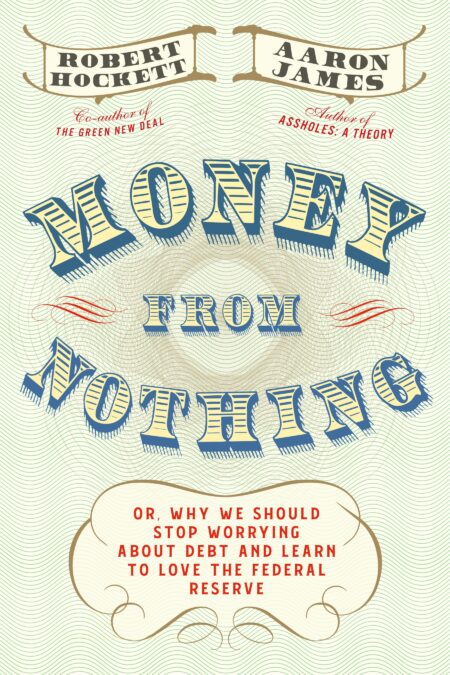
In Part 1 of this two-part post, I explained that, owing to its endogeneity and consequent vulnerability to what I call Recursive Collective Action Predicaments, monetized public capital must, if it is to be productively rather than merely speculatively deployed, be publicly managed, while privately intermediated capital may be privately managed.I then suggested that public…
Conversations about progressive possibilities for economic policy and political economy often undertheorize or ignore international trade. The international economy is often seen as a free-for-all between countries, a space where powerful multinational firms are able to play governments off one another, resulting in a race to the bottom of domestic laws and regulations. Or, it is seen in terms of competition between economies with coherent rules, laws, and industries in the domestic sphere, but where Ricardian comparative advantage wins out internationally. Competition in international markets is seen as a flat state of nature, a “real” free market. By convincing ourselves that international trade and competition exists in a void–or accepting the assumption that it does–we ignore how law, policy, and regulation reshape the economy and commercial relationships to favor certain groups at the expense of others.
Central banking and finance in the US have a curiously ‘dialectical’ history – a history mirroring, in interesting ways, that of our federal union itself. Both histories reflect ambivalence about, and hence oscillation both toward and away from, collective agency and its political manifestation in centralized governance. Tracing these parallel trajectories can shed helpful light upon certain features of American monetary history, finance-regulatory tendencies, and of course public finance.
If you think shortages—in goods like toilet paper, meat, and masks—came in with the pandemic, think again. Shortages are periods during which demand exceeds supply, and they’re an inescapable feature of all markets, all the time. When an investor bids up the price of Apple stock because none is available at current prices, that’s a…
The price of food increased 2.6% in April, the largest single-month increase since 1974, but food industry executives are insisting that the country has enough food. So why are prices going up? The explanation provided by the industry is that consumers are buying more than they need, creating shortages. But a shortage is not a…
Learned Hand once described the task of the Federal Trade Commission as “discover[ing] and mak[ing] explicit those unexpressed standards of fair dealing which the conscience of the community may progressively develop.” In a previous post, I argued that moving consumer protection law beyond consumer sovereignty requires recovering this way of thinking, common among Progressives and…