Skip to content

Searching: courts

The Law and Political Economy Project

An Abolitionist Horizon for Child Welfare

This post is part of a series on Black Lives Matters. The COVID-19 pandemic and police killings of George Floyd and other Black men and women have starkly revealed society’s race and class-based inequality and brought unprecedented attention to the excesses of the carceral state. One arm of punitive state regulation, however, has gone largely undiscussed:…

Carceral Feminism at a Crossroad

In this watershed moment when policymakers feel liberated to embrace noncarceral responses to the behaviors that laws label crimes, one question rings out: “What about rape and domestic violence?” The pro-policing contingent intends this as a rhetorical “gotcha.” But many progressives open to meaningful reform genuinely worry about the demise of gender crime law, which they see as a formidable legal tool against the patriarchy.

LPE Originals

Amy Kapczynski

Amy Kapczynski is Professor of Law at Yale Law School, a co-founder of the LPEblog, and a faculty co-director of the LPE Project and the Yale Global Health Justice Partnership. My work focuses on law and political economy, and broadly aims to theorize the failures of legal logic and structure that condition contemporary inequality, precarity,…

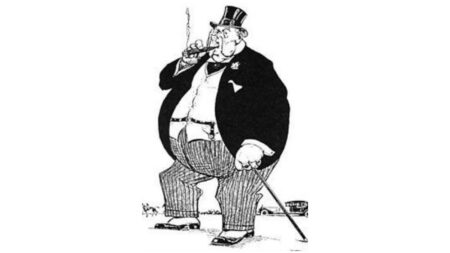
fat capitalist cartoon

Weekly Roundup: July 17, 2020 (Featuring New Editors!)

This week at the Blog… we continued our symposium on the legal representation of poor people. On Monday, Gregory Louis argued that critical legal practice requires a critical realist approach to law: looking everywhere, not just courts, to interfere in the political contests that structure and restructure governance regimes. On Tuesday, Sam Allison-Natale engaged with two…

The Clean Sea Breeze of Bad Men

This is part of our symposium on the legal representation of poor people. In Professor Hershkoff and Loffredo’s post contextualizing their comprehensive handbook within the LPE movement, we can detect a certain irony. As they acknowledge, many lawyers, particularly those trained at elite institutions, eschew the representation of low-income communities for a host of reasons amounting…

LPE Praxis for Intergenerational Joy

The question of how to put LPE into practice in legal services work naturally raises questions around methodology: who should elucidate and fulfill an agenda for life-affirming social change, and how should we go about it? More specific to lawyering, who should occupy the role of a lawyer fighting alongside her clients for racial and economic justice?

LPE in Practice: Why We Wrote Getting By

This is part of our symposium on the legal representation of poor people. Students often ask how they can put “LPE into practice.” Earlier this year (before law schools went remote because of COVID), Professor Angela Harris spoke at NYU Law and addressed this question, emphasizing three key features of moving from theory to practice:…

Weekly Roundup: June 3, 2020

This week at the blog… the conversation on the relationship between socialism and constitutionalism (started by Willy Forbath last week) continued. Sanjukta Paul explored the implication of the inevitably constitutive role of law in economic coordination for the relationship between economic regulation and structural constitutionalism, providing a drive-by revisionist account of the National Industrial Recovery…

Last Week’s Surprisingly Deep Victory for LGBT Workers

This post was originally published at Jacobin. Last Monday, the Supreme Court ruled that employment discrimination on the basis of sexual orientation or gender identity is prohibited by Title VII of the Civil Rights Act of 1964. The decision brings employment law in line with public opinion: a majority of Americans favor employment protections for LGBT…

The Constitution of Social Progress

Constitutionalism sits at the commanding heights of law. That framework of governing structures, rights, and ideals shouldn’t be abandoned to right-wing and liberal-centrist construction. Socialists and progressives instead ought to embrace a constitutional vision in which legislative and executive power give effect to the spirit of democratic equality that underlies but outruns the Constitution’s text.

fat capitalist cartoon

Weekly Roundup: June 26, 2020

This week, The Blog hosted the first part of a symposium on socialist constitutionalism. Willy Forbath kicked off the series with a two–part post revisiting the Weimar constitution and its efforts to create a structure for worker participation in multiple levels of government, including in the firm. Sam Moyn responded with notes of skepticism about…

Socialism Past and Future – or Socialism is Past, and the Future?

In Forbath’s telling, Weimar is not a cautionary tale but an opportunity for a do over. There’s much to like, and learn, from rekindling this vision of social democracy. In what follows, I invite other characters to this story, drawing from Mexico’s constitutional history, and raise a few questions about the limits of the social democratic bequest as a compass for our imagination.

Socialism Past and Future (Part II of II)

In my last post, I began a discussion of the Weimar Constitution as one of the first constitutions containing provisions for social and economic rights (SER), and perhaps the very first one, in which socialists had an important hand drafting and expounding. The literature on constitutional SER misses a great deal when it casts the Weimar Constitution as a weak, infant version of later SER constitutions, which grew stronger over time.