
Weekly Roundup: February 19, 2021
By
LPE Editors
The conclusion of the UBI series, the continuation of the Democracy Beyond Neoliberalism Conference, and more!
The conclusion of the UBI series, the continuation of the Democracy Beyond Neoliberalism Conference, and more!

I follow Patricia Williams, Angela Harris & Aysha Pamukcu, in arguing universal rights, to basic income and other resources, are insufficient but necessary ingredients for justice. Indeed, I argue for permanent, non-discretionary funding of these rights. No one truly knows how much money the U.S. government spends encoding and encasing private property rights, much less private capital’s rights to coordinate or contract. In many ways, these costs are “baked into” society. So, ultimately, should it be for rights to income, healthcare, housing, education, employment for all.

It would be ironic indeed if a UBI slipped quickly through the fingers of lower-income people of color and into the coffers of jurisdictions most aggressively criminalizing poverty. This would negate UBI’s ability to facilitate work refusal because UBI—devoured by debt—would no longer be available to meet basic needs without a wage (or connection to a wage-earner). Moreover, this negation’s radically unequal racial distribution would mock UBI’s pretensions to universalism. Substantive universality requires more than formal inclusion and nominally equal payments. It requires cash receipts that deliver equal capacity to refuse work.

The second part of a two-part response, in which Dagan responds to the worry that liberal property’s happy humanistic vision might end up as a distracting utopia.
This is part of our symposium on Hanoch Dagan’s book, A Liberal Theory of Property. For a concise version of Dagan’s argument, see this restatement. Image credit: Sam Abell, National Geographic. Hanoch Dagan has written a wonderful, thoughtful, and thought-provoking book. Its publication could have hardly come at a more prescient time. Many observers and commentators rightly despair over the…
Dagan’s theory of property provides a novel way to make sense of the puzzle of incorporating diversity within uniformity of property rights, but his approach fails to capture the deep pluralism of property.

Aaaaaand we’re back! As the crises deepen, we’re doing our best to maintain our rigorous focus on the deep causes and what we can do about them. First things first: we have some new editors! Derrick Rice is a 3L at Yale Law School and a co-founder of the LPE student group. At the Blog,…

This year the Supreme Court will hear Cedar Points Nursery v. Hassid, a case out of California which challenges a forty-five-year-old farm labor regulation. The petitioners are alleging that this regulation, which grants farm labor unions a limited right of access to an employer’s property, is unconstitutional on the grounds that it amounts to the government taking their property rights without compensation. This case potentially represents the culmination of a decades-long reactionary campaign against the ability of unions to access an employer’s property. It’s another legal gut-punch to the labor movement and part of a long history of judicial antagonism against workers.
The staggeringly disproportionate ravages of the COVID-19 pandemic among people of color, juxtaposed with the summer’s wave of protest against police violence against Black people in the United States, make clear that population health is bound up with existing patterns of social subordination. This reality transcends presidencies and pandemics—even in “normal” times, race, gender, and income play outsize roles in predicting health outcomes in this country. Yet, while the health system is a profoundly important social institution that often determines who lives and who dies, it has rarely been subject to the same level of scrutiny that has been directed at other systems we consider integral to how our democracy functions, such as the justice and electoral systems. In our recent piece, “Democracy and Health: Situating Health Rights within a Republic of Reasons,” we set out the contours of a health system that is grounded in an understanding of entitlements to health (public health and care) as assets of social citizenship. These contours include (1) public participation; (2) fair financing; (3) transparent and fair priority-setting processes; (4) universally acceptable, accessible, and adequate care; and (5) enforceable rights.

One of the great dangers of our national climate policy vacuum is that the fox will happily take charge of the henhouse. In North Carolina, a partnership between Big Pig and Big Energy foreshadows a troubling realignment of the forces of oligarchy…
The law treats animals as objects with no legally-recognized rights or interests. Changing the basic legal status of animals will make positive change easier to achieve.
Animal agriculture relies on cultural myths about farming. The animal rights movement seeks to build countervailing narratives that center the ugly reality. The result is an ongoing legal battle about speech, truth, and visibility.
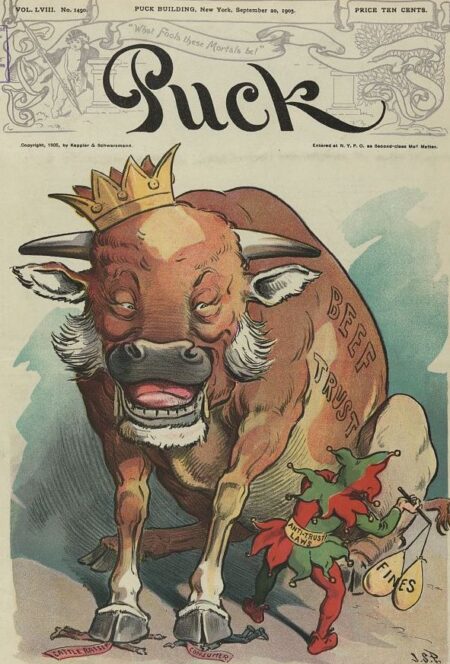
Big Meat’s rise to power is not the result of entrepreneurial savvy exercised in a free market. Multinational meat conglomerates have flourished because they are massively subsidized at the public’s expense.
In today’s post I explore how the success of those encampments presents a vision of contracting that counters the traditional Lochner-esque “freedom of contract” through the occupation and democratization of the right to contract which, under a commodified housing system, ultimately enlivens the right to housing.
This summer, in the wake of the murder of George Floyd and the corresponding racial justice uprising, a coalition of unhoused people and organizers with the Black and Brown Workers Cooperative and the Workers Revolutionary Collective quietly hitched some tents in a park just off the Benjamin Franklin Parkway in downtown Philadelphia.