Market-Based Law Development
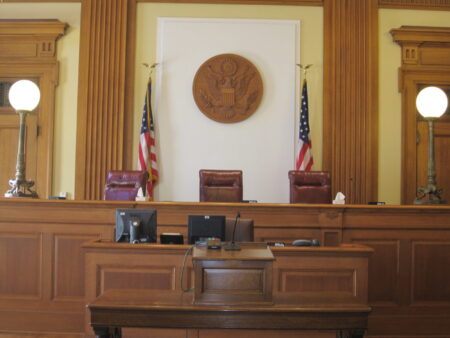
To understand courts’ relation to the reproduction of economic domination requires close investigation of how they actually work for different types of litigants.
This post was originally published at Jacobin. Last Monday, the Supreme Court ruled that employment discrimination on the basis of sexual orientation or gender identity is prohibited by Title VII of the Civil Rights Act of 1964. The decision brings employment law in line with public opinion: a majority of Americans favor employment protections for LGBT…
Today, the Supreme Court will hear oral argument on the question of whether Title VII’s prohibition on sex discrimination includes sexual orientation and gender identity discrimination. To provide context to this case, the LPE Blog asked two scholars for contributions that detail the history of sex discrimination protections and address how law should redress gender hierarchies…
LGBTQ workers have never turned solely to the law to define or protect their rights. In years when many feminists and workers of color were narrowing their focus to pursuing individual advancement under antidiscrimination provisions like Title VII, LGBTQ workers articulated a new kind of right: to be fully oneself at work. They argued that sexuality and gender were irrelevant to job performance, as the older “homophile” gay rights movement had claimed. But they also denied that anyone could—or should—shed a piece of their identity at the office, factory, or schoolhouse door.
For the first time in nearly a century, the conservative scholars, judges, lawyers, and advocacy groups challenging the constitutional foundations of the modern administrative state have reached a critical mass. However, by relying on originalist foundations, these critics may be inviting in a Trojan Horse. As I argue in a forthcoming article, returning to 19th century administrative law would smuggle in an unwelcome consequence: largely eliminating judicial review of the constitutionality of agency action. As a result, they may have to choose between their originalist attack on the modern administrative state and preserving a type of court review they value highly.
Why do the laws underlying capitalism so heavily favor the wealthy and corporations? One answer, according to my research, lies in the political economy of the legal profession. At the most elite level of the profession sits the Supreme Court bar, lawyers with enormous influence over key rules that structure market relations. In a recent…
Over a decade ago I wrote a short piece called “Poverty Law and Civil Procedure: Rethinking the First-Year Course [Poverty],” published as part of a symposium issue of the Fordham Urban Law Journal on the place of poverty in the law school curriculum. Reginald Heber Smith’s statement from 1919 was the epigraph: “The administration of…
A primer on constitutional law from the perspective of political economy.
Focusing on antitrust, this post explores how a modern law and economics might look, and highlights the diverse normative implications of state-of-the-art economics. As this post demonstrates, taking economics seriously is consistent with many different policy positions.
The empirical research we present in this post itself exemplifies how economics can be a powerful tool for examining (and not just assuming) the relationships between the formal structure of the law and the activities of economic exchange. As we lay out further in a subsequent post, legal leftists who fail to engage with the richness of academic economics miss out on many important insights.
The struggle over Judge Kavanaugh’s nomination for the US Supreme Court and the subsequent horrible spectacle of the Senate hearings brought about a “genuine question” by a leading economist, Dani Rodrik: “how do we prevent ‘the Supreme Court has always been political’ argument from morphing into ‘judicial independence and the rule of law are political…
Judge Brett Kavanaugh, now very close to controlling the decisive vote on the Supreme Court, resembles other candidates for high political office. He has a constituency–the Federalist Society, anti-abortion activists, everyone who hopes to see Obamacare weakened and affirmative action ended–and other constituencies in opposition. Lots of money is being raised and spent for and…
The nomination of Brett Kavanaugh to the Supreme Court is on the knife’s edge. The stakes are higher than for the confirmation of any American judge in our lifetimes. For that reason alone, it is probably not a good time to stage a general debate whether and in what sense law is something more than…
Thursday’s Supreme Court confirmation hearing was a stomach churning, nauseating affair. Christine Blasey Ford laid her life on the tracks, knowing full well that trains delivering important men can rarely be stopped. That was enough, but then came the turn: Brett Kavanaugh, partisan warrior. He tore into Democrats for a process almost entirely dictated by…
Recently on this blog, Sabeel Rahman and Ganesh Sitaraman detailed the growing interest among public law scholars in questions of power, inequality, and political economy. One feature of the emerging scholarship, they correctly note, is that it directs its attention not primarily to courts, but to legislators and social movements; it focuses not primarily on…