What Supply Chains Can Teach Us about Neoliberalism
Supply chains, properly understood, are political entities seeking to govern us. Once we appreciate this fact, it becomes easier to see how we might hold this form of corporate power to account.
Nikolas Bowie, Veena Dubal, and Amy Kapczynski discuss the potential implications of the Cedar Point Nursery for workplace democracy, as well as legal and non-legal strategies for overcoming this concerning turn in Takings Clause jurisprudence.
Last week, the Supreme Court struck down the Biden Administration’s most recent moratorium on evictions. The decision, along with an anemic federal rental assistance effort, has put millions of people at risk of being removed from their homes. To offer our readers different ways into this important ruling, we asked Amy Kapczynski, Nikolas Bowie, Tara…
How can we fight for accountability when privatization is designed to allow the government and private contractors to evade just that? A recent lawsuit—and the campaign behind it—points to one underexplored answer.
This weekend, Chileans will elect a Constitutional Convention. This Constitution will finally replace that which Pinochet’s junta put into place, in one of the first victories of neoliberalism. Why is this Convention happening now? And what are its prospects?
In a previous post, one of us described why we need global cooperation to achieve massively scaled up production of COVID vaccines. The United States must play a key role in this process, because it has the ability to mobilize resources, and powerful leverage over companies that have so far resisted serious participation in global efforts – especially Moderna, Pfizer, and J&J. Some commentators question whether the US has the power to compel this cooperation. Others have doubted the relevance of the demand coming from developing countries to temporarily waive the requirements of the World Trade Organization’s TRIPS Agreement to facilitate more manufacturing. In this post, we explain why existing US law gives the Biden Administration the power to mandate sharing and overcome IP barriers, and how the TRIPS waiver can contribute importantly to efforts to scale up production at a global scale.
The shortage of vaccines is a manmade problem, brought on by the false promise of innovation-by-monopoly and by reproduction of colonial dynamics. Our global R&D system layers privatized control and profits for huge firms based in rich countries atop a vast regime of open science and public subsidy. We can scale up production if we force pharma to share.
Mari Matsuda is a central scholar within the critical traditions of legal scholarship: in particular Critical Legal Studies, Critical Race Theory, and feminist legal theory. Amna Akbar sat down with her virtually, on December 3, 2020, to ask some questions about her insights on where we are today, where we have been, and where we might go. Today’s part of the conversation focuses on how legal analysis has changed and how movements do and should influence legal scholarship.
Mari Matsuda is a central scholar within the critical traditions of legal scholarship: in particular Critical Legal Studies, Critical Race Theory, and feminist legal theory. Amna Akbar sat down with her virtually, on December 3, 2020, to ask some questions about her insights on where we are today, where we have been, and where we might go. Today’s part of the conversation focuses on the origins and the legacy of CRT.
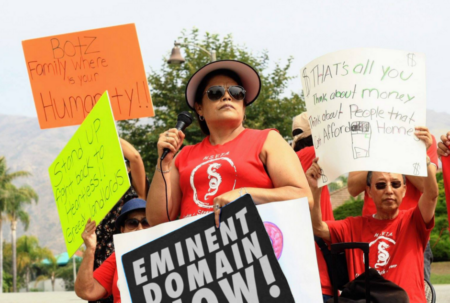
You hear it everywhere: we need more “affordable housing.” It’s a seemingly uncontroversial call, and yet… a group of members of the LA Tenants Union were compelled to document the many and profound problems with the dominant model of privatized “affordable housing” in the United States.
In today’s post I explore how the success of those encampments presents a vision of contracting that counters the traditional Lochner-esque “freedom of contract” through the occupation and democratization of the right to contract which, under a commodified housing system, ultimately enlivens the right to housing.
This summer, in the wake of the murder of George Floyd and the corresponding racial justice uprising, a coalition of unhoused people and organizers with the Black and Brown Workers Cooperative and the Workers Revolutionary Collective quietly hitched some tents in a park just off the Benjamin Franklin Parkway in downtown Philadelphia.
Through a progressive approach to designing policy feedback loops with communities and their organizations, we can create and win policies that both meet the immediate material needs and redistribute political and economic power more equitably.
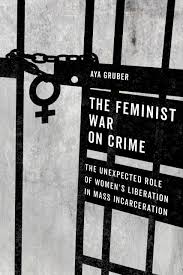
In this watershed moment when policymakers feel liberated to embrace noncarceral responses to the behaviors that laws label crimes, one question rings out: “What about rape and domestic violence?” The pro-policing contingent intends this as a rhetorical “gotcha.” But many progressives open to meaningful reform genuinely worry about the demise of gender crime law, which they see as a formidable legal tool against the patriarchy.
Survey data suggests that the recent protests in support of Black lives constitute the largest movement in U.S. history. The Blog interviewed five law students about what it is like to be a law student right now.